- Welcome Sign
- Seating Chart
- Directional Signs
- Bar Menu and Signature Cocktail Signs
- Table Numbers
- Guest Book and Card Table Signs
- Ceremony Program or Order of Events
- Unplugged Ceremony Sign
- Reusing Signage After the Wedding
- Choosing a Font and Style That Actually Matches
- Accessibility Considerations Worth a Quick Thought
- Timing and Setup
- Multi-Language or Bilingual Signage
- Keeping Sign Inspiration Organized
- Backup Plans for Outdoor Signage
- Storing Signage Safely Before the Day
- Coordinating Signage Colors With Your Overall Palette
- Don't Let Perfect Be the Enemy of Done
- Small Details, Real Impact
- FAQ
Signage is the wedding decor category that quietly gets forgotten until it's suddenly urgent, since none of these signs are hard to make, they're just easy to deprioritize behind flowers and dresses. Here's the full wedding signage checklist so nothing gets left off until the final week.
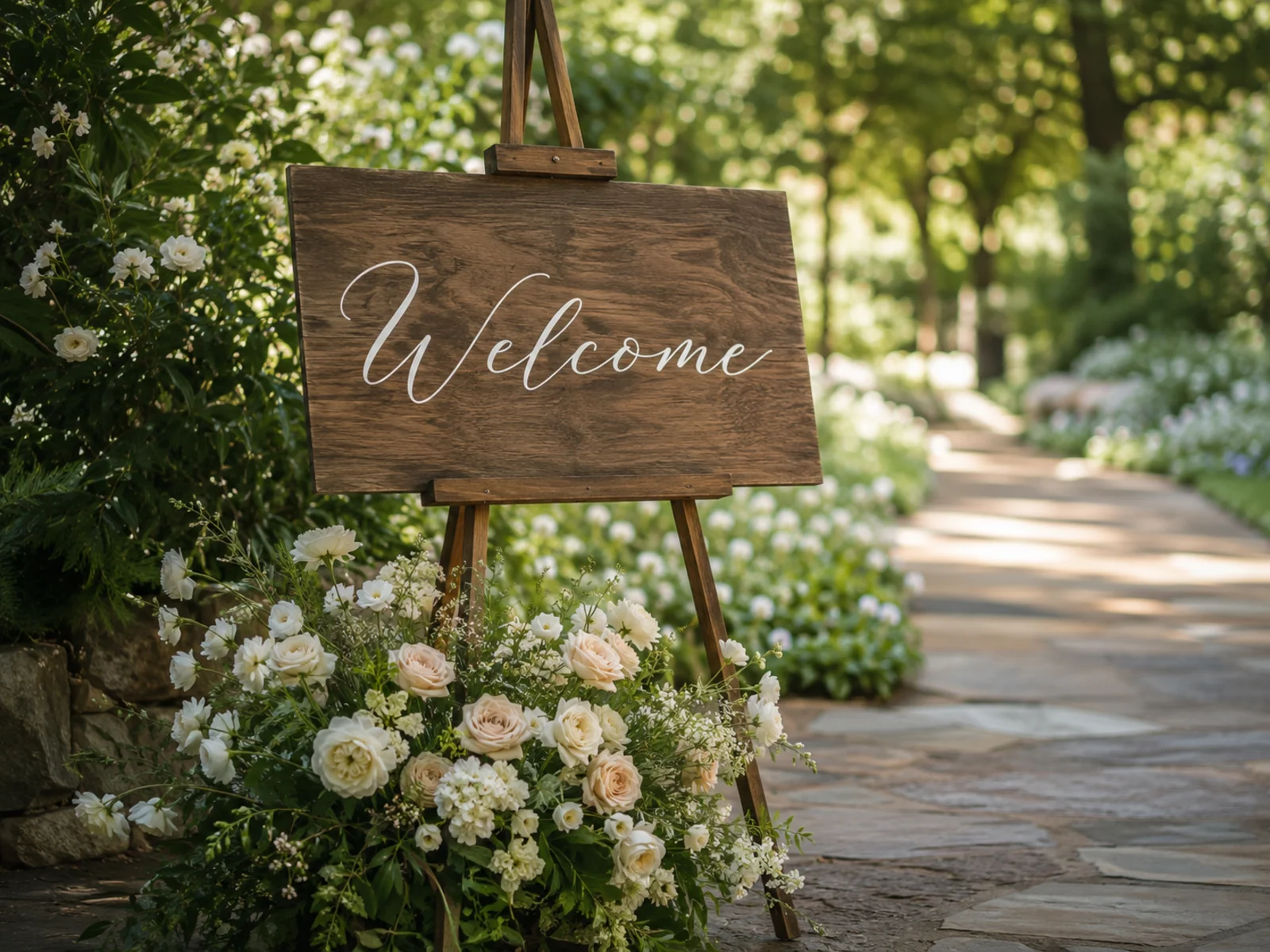
Welcome Sign
The first thing most guests see, usually placed at the ceremony or reception entrance. Typically includes the couple's names, the date, and sometimes a short welcome message. This is the one sign worth spending a bit more on design-wise, since it often ends up in photos.
Seating Chart
Especially important for larger guest lists, where finding a table without guidance means guests wandering or a bottleneck forming near the entrance. Confirm final table assignments before ordering, since this is the sign most likely to need a last-minute edit if a guest count shifts.
Directional Signs
If your ceremony and reception are in different areas, or if parking isn't obvious, directional signage matters more than couples expect. "Ceremony this way," "reception upstairs," that kind of thing. Small, easy to make, and genuinely useful for guests unfamiliar with the venue.
Bar Menu and Signature Cocktail Signs
If you're doing signature cocktails or a specific bar menu, a sign at the bar saves the bartenders from answering the same question fifty times. Include the drink names and what's in them, especially if you've named cocktails after something personal that guests won't otherwise understand.
Table Numbers
Simple, but easy to forget as their own line item since they get lumped mentally into "centerpieces." Confirm the style matches your overall decor, and make sure they're large enough to read from a few feet away, especially at longer tables.
Guest Book and Card Table Signs
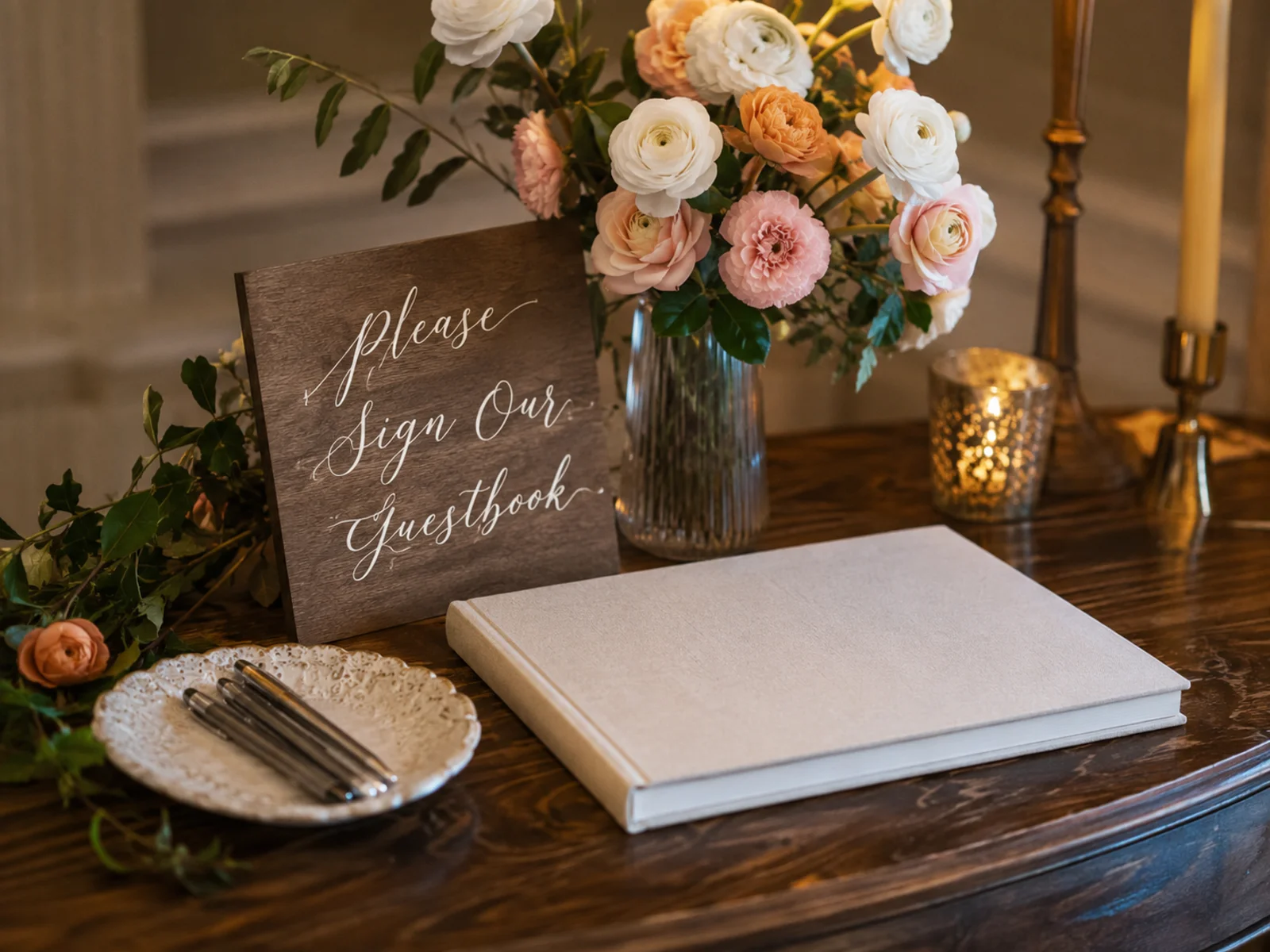
A small sign directing guests to the guest book, or letting them know where to leave cards and gifts, saves a surprising amount of "where do I put this" confusion during cocktail hour.
Ceremony Program or Order of Events
Not strictly signage, but functions the same way, a printed or displayed rundown of the ceremony order, especially useful if you have specific readings, rituals, or a longer ceremony guests might not be familiar with.
Unplugged Ceremony Sign
If you want guests off their phones during the ceremony, this needs its own small, clearly placed sign near the entrance, since it only works if guests see it before they sit down, not after.
Reusing Signage After the Wedding
A few signage pieces are worth designing with an eye toward reuse rather than treating everything as single-use. A welcome sign with just your names and date, rather than the full wedding date spelled out with "please join us," can double as home decor afterward. Table number signs in a style you like can become picture frames or shelf decor. It's a small thing, but for couples who'd rather not have a box of one-time-use signage sitting in storage, worth factoring into the design choices upfront.
Choosing a Font and Style That Actually Matches
Signage is one of the few decor elements guests read up close, which means font choice matters more here than almost anywhere else. A script font that looks elegant on an invitation can be genuinely hard to read at a distance on a large welcome sign. As a rule, pick one primary font for anything meant to be read quickly, a seating chart, directional signs, and save more decorative fonts for shorter text like a welcome sign's headline. Keeping the same one or two fonts across every sign also makes the whole set feel designed together instead of assembled from different sources.
Accessibility Considerations Worth a Quick Thought
A few small choices make signage genuinely easier for all guests to use: higher contrast between text and background over a trendy but low-contrast color pairing, larger font sizes than feel necessary, and placing signs at a height and location that doesn't require guests to squeeze past each other to read them. None of this requires a redesign, just a second look at drafts before finalizing them.
Timing and Setup
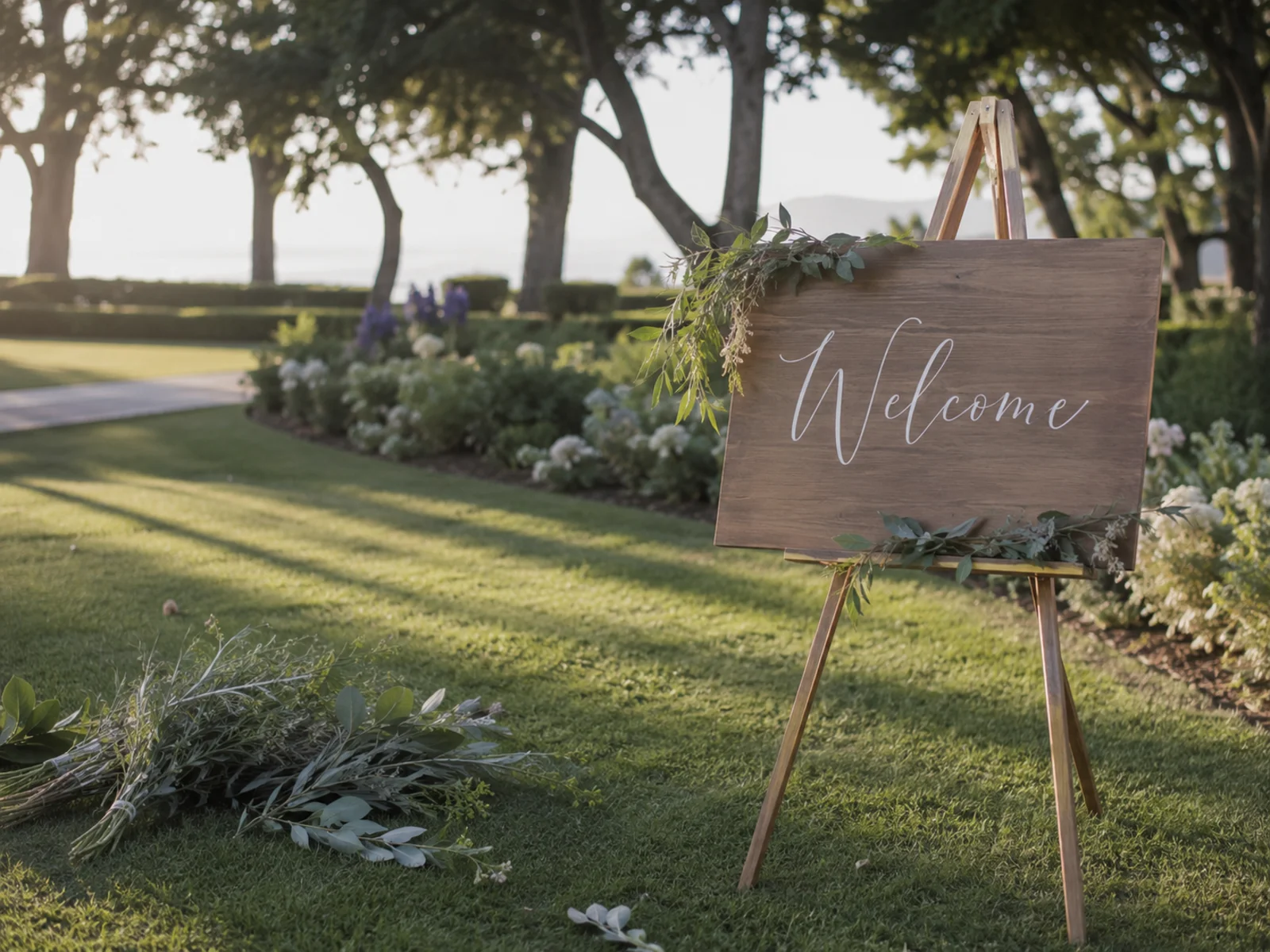
Order custom or printed signage 4 to 6 weeks out to allow for design and printing time. On setup: confirm specifically who's placing signage on the day, since it's not automatically included in most venue or vendor contracts, and a box of unset-up signs an hour before the ceremony is a stress nobody needs.
Multi-Language or Bilingual Signage
If part of your guest list speaks a different primary language, bilingual signage, especially for the welcome sign, ceremony program, and directional signs, is a genuinely thoughtful addition that's easy to overlook until late in planning. It doesn't need to duplicate every sign, even key ones translated shows guests they were thought of. Loop this in with your designer or printer early, since bilingual layouts sometimes need a bit more space than a single-language version.
Keeping Sign Inspiration Organized
Signage ideas tend to come from scattered sources, a font style from one Pinterest pin, a layout idea from someone else's wedding on Instagram. WedThread saves that inspiration wherever you find it and sorts it automatically, so when you're ready to actually design your signs, the ideas you liked are in one place instead of buried in old likes and saves.
Backup Plans for Outdoor Signage
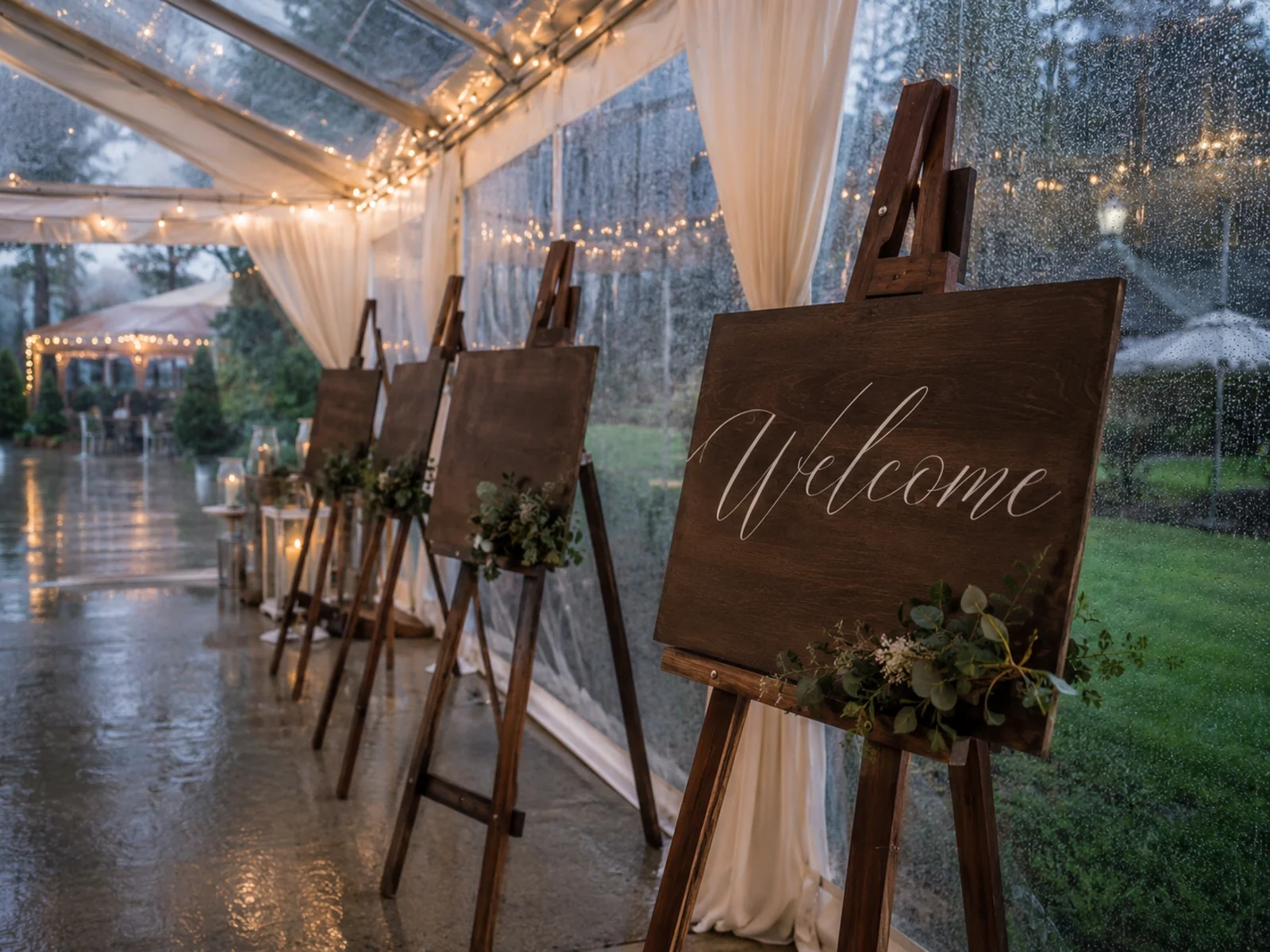
If any signage is going outdoors, wind, rain, or simple wear over a long day are worth planning around. Freestanding signs need real weight or secure staking so a gust of wind doesn't send a welcome sign into the flower bed mid-ceremony. For anything printed on paper rather than a more durable material, consider a laminate finish or a plan to bring it inside if weather turns. It's a small detail, but it's the kind of thing that's much easier to prevent than to fix once the day is underway.
Storing Signage Safely Before the Day
Once signs are printed or made, store them flat and protected from bending or moisture until the wedding, especially anything with delicate materials like acrylic or mirrored surfaces. A dedicated box or portfolio case for signage, kept somewhere safe in the final weeks, avoids the last-minute stress of discovering a damaged sign the morning of.
Coordinating Signage Colors With Your Overall Palette
Even simple, text-only signage benefits from matching your wedding's broader color palette rather than being an afterthought in whatever material happened to be available. A quick color reference shared with your printer or designer keeps signage feeling like part of the same cohesive day rather than a mismatched add-on.
Don't Let Perfect Be the Enemy of Done
Signage doesn't need to be a design masterpiece to work well. Clear, legible, and on-brand with the rest of your day is enough, spending weeks agonizing over font choices takes time better spent elsewhere in planning.
Small Details, Real Impact
Signage rarely gets the attention florals or the dress does, but it quietly shapes how smoothly guests move through the day. Worth the extra bit of planning it usually gets skipped.
At minimum: a welcome sign, seating chart, and any directional signage guests need to find the ceremony or reception space. Everything beyond that is nice to have, not required.
Usually still helpful, especially for larger weddings, since it lets guests find their table without a line forming at a place card table. For smaller weddings, place cards alone can be enough.
Large enough to read from a few feet away without guests needing to crowd it, typically 24x36 inches or larger for a freestanding easel sign. Smaller works fine for a table-top version.
Simple signs with just text are reasonable to DIY with a printing service. More detailed designs, like an illustrated welcome sign or a large seating chart, are usually worth ordering from a designer, since mistakes are expensive to fix last minute.
4 to 6 weeks out for custom or printed signage, since it needs design time plus printing time. Confirm final guest and table counts before ordering the seating chart specifically, since it's the sign most likely to need last-minute edits.
Usually your day-of coordinator, planner, or a designated friend or family member, not the venue by default. Confirm this ahead of time so signage isn't sitting in a box somewhere while the ceremony starts.