- Start With Total Guest Count, Not Total Budget
- Venue and Catering: The Biggest Slice
- Photography and Videography
- Attire
- Flowers and Decor
- Music and Entertainment
- Alcohol and Bar Service
- Stationery, Favors, and the Small Stuff
- Deposit Schedules and When Money Actually Leaves Your Account
- The Buffer Nobody Budgets For
- What Actually Moves the Needle If You Need to Cut
- How to Actually Track It as You Go
- Who's Paying, and Why That Conversation Needs to Happen Early
- Regional Cost Differences Are Real
- Revisiting the Budget Monthly
- Keeping Perspective on the Numbers
- FAQ
Every "budget for wedding planning" search eventually leads to the same wall of conflicting numbers, since average wedding costs vary wildly by region and guest count. What's actually useful isn't a single dollar figure, it's knowing where the money tends to go by category, so you can build your own budget around your actual priorities instead of a national average that doesn't match your city.
Start With Total Guest Count, Not Total Budget
Guest count drives more of your budget than almost anything else, since catering, rentals, favors, and even venue size scale directly with headcount. Before setting a dollar figure, get a real guest count locked in, even a rough one. A wedding for 80 and a wedding for 200 aren't the same budget exercise at all.
Venue and Catering: The Biggest Slice
This category typically eats 40 to 50 percent of the total budget, more than any other single line item. It covers the space itself, food, and often rentals like tables and chairs if the venue doesn't include them. This is also where couples most often get surprised, since quoted venue prices don't always include catering, and catering quotes don't always include service charges or gratuity.
Photography and Videography
Usually the second-largest category, and one of the last things couples cut, since it's the part of the day you actually keep afterward. Photography packages vary enormously based on hours covered and deliverables, so get specific about what's included before comparing prices across vendors.
Attire
The dress, suit, alterations, and accessories add up faster than expected, mostly because of alterations, which are frequently quoted separately from the garment itself. Budget for alterations as its own line item, not an afterthought tacked onto the dress price.
Flowers and Decor
This is one of the more flexible categories, and often where couples trim first if the budget's tight. Florals scale with venue size and guest count, so a smaller, more intentional florals plan, hero pieces at a few key spots instead of covering everything, can cut costs without it looking cut.
Music and Entertainment
DJ or live band, plus any ceremony musicians. Costs vary a lot by region and by whether you're booking a full band versus a DJ. This category is also where couples sometimes underbudget the ceremony portion specifically, since it's easy to plan for reception music and forget the walk down the aisle needs its own sound setup.
Alcohol and Bar Service
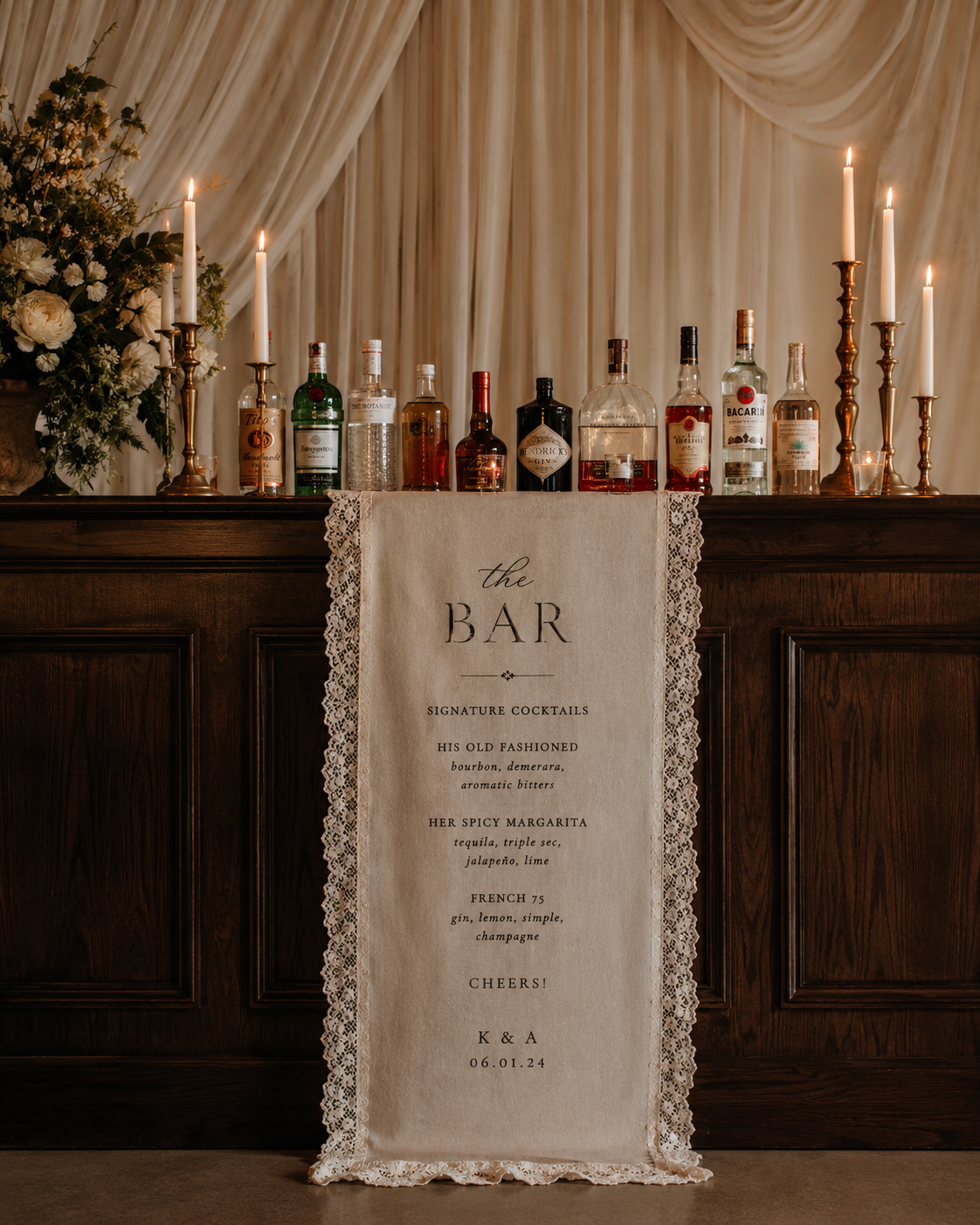
Frequently the most underestimated line item on the whole list. Couples budget carefully for venue and catering, then get caught off guard by bar costs, corkage fees, or service charges that show up separately. If you're trying to estimate this ahead of time, a proper drink calculator based on guest count and event length gets you much closer than guessing.
Stationery, Favors, and the Small Stuff
Invitations, save-the-dates, programs, table numbers, and favors don't individually cost much, but they add up into a real line item once you total them, often more than people expect for what feels like a small category. This is also one of the easier places to save without it being noticeable to guests, digital save-the-dates instead of printed, simpler invitation suites, skipping favors entirely, are all common cuts that rarely register with anyone at the wedding.
Deposit Schedules and When Money Actually Leaves Your Account
Wedding budgets don't get spent all at once, most vendors require a deposit to book, typically 20 to 50 percent, with the remainder due closer to or on the wedding day. This matters for cash flow planning, not just total budget. Mapping out roughly when each deposit and final payment is due, alongside the total, helps avoid the surprise of several large payments landing in the same month.
The Buffer Nobody Budgets For
Set aside 5 to 10 percent of your total budget for the unexpected: a last-minute rental, extra alterations, a vendor tip that wasn't in the original plan. Almost every wedding hits at least one of these, and having a buffer already built in turns it into a non-event instead of a scramble.
What Actually Moves the Needle If You Need to Cut
If the total is coming in over budget, not every category cuts equally well. Guest count is the single biggest lever, since nearly every other cost scales with it, cutting the list by 15 percent often does more than trimming florals or favors ever will. After that, venue choice matters more than most individual vendor negotiations. A slightly less expensive venue, or one that includes more in its base price, tends to save more than haggling with a photographer or florist over a few hundred dollars.
How to Actually Track It as You Go
A shared spreadsheet with a column per category is still the simplest way to track the numbers themselves. Where it gets messier is everything feeding into those numbers, vendor quotes, screenshots of options you're comparing, links to venues you're deciding between. Most couples end up doing that part across a dozen browser tabs and a camera roll full of screenshots, which makes it hard to remember why you liked one florist's quote over another three weeks later. WedThread saves that research the same way it saves any other inspiration, from a share button or straight from your camera roll, sorted automatically into categories like Vendor and Venue, so when you're comparing quotes side by side, you're not hunting for the screenshot first.
Who's Paying, and Why That Conversation Needs to Happen Early
Budget planning gets a lot easier once it's clear who's actually contributing, whether that's the couple alone, both sets of parents, or some split arrangement. This conversation is sometimes uncomfortable, but having it early, before venues are toured and vendors are contacted, prevents the awkward situation of falling in love with something the actual combined budget can't support. If parents are contributing, get clarity on whether it's a fixed amount or a percentage, since that changes how much flexibility there is if costs shift.
Regional Cost Differences Are Real
The same wedding costs meaningfully different amounts depending on where it happens. Major metro areas and popular destination wedding regions run well above the national averages you'll find in generic budget articles, while smaller cities and rural venues often come in well under them. Rather than anchoring to a national number, it's worth getting two or three real venue and catering quotes in your actual area early, since that gives a far more accurate starting point than any average.
Revisiting the Budget Monthly
Set a recurring monthly check-in, even just fifteen minutes, to review actual spending against the plan. Catching a category drifting over budget in month three is far easier to correct than discovering it all at once in the final month, when there's little room left to adjust.
Keeping Perspective on the Numbers
However the final budget shakes out, remember it's a tool for making good decisions, not a scorecard to feel anxious about. Most guests remember how a wedding felt, not the exact dollar amount behind any single detail.
Venue and catering together usually take the biggest single slice, often 40 to 50 percent of the total budget. It's the category most couples underestimate going in.
Alcohol and service fees. Couples often budget the venue and catering carefully, then get surprised by bar costs, gratuities, and service charges that get added on top.
Flowers, favors, and stationery are usually the first things trimmed, since guests notice them less than food, photography, or the dress. Photography and the venue are usually the last things people cut.
Before, if at all possible. Venue and catering eat such a large share of the budget that picking one first often forces every other decision around whatever's left, instead of the other way around.
A buffer of 5 to 10 percent of your total budget is a common rule of thumb, for the things that always come up: extra alterations, a last-minute rental, a vendor tip you didn't plan for.
Extremely common, and usually happens gradually through small upgrades rather than one big decision. Tracking spending by category as you go, instead of only at the end, tends to catch it earlier.
A shared spreadsheet with a column per category works for the numbers. For the vendor quotes, contracts, and comparison shopping that feed into those numbers, something built for saving and organizing that research, like WedThread, keeps it from turning into forty browser tabs.