- Budgeting Resources
- Timeline and Schedule Resources
- Vendor Research Resources
- Inspiration and Idea Organizing
- Guest List and RSVP Resources
- Wedding Website Resources
- Contract and Document Storage
- Registry Resources
- Resources for Managing Vendor Communication
- Resources Specific to DIY Elements
- Resources for the Final Month
- Resources for Post-Wedding Tasks
- Not Every Resource Fits Every Wedding
- Building Your Own Shortlist
- FAQ
Search "wedding planning resources" and you'll get hundreds of roundup posts recommending the same twelve tools with no real explanation of what each one is actually for. Here's a shorter, more useful version, organized by what stage of planning each resource actually solves.
Budgeting Resources
A real budget tracker, not just a target number in your head, is the single most useful early resource. Whether it's a spreadsheet template or a dedicated app, the goal is the same: a running total by category that you actually update as deposits go out, not a number you set once at the start and never revisit.
Timeline and Schedule Resources
Two different timelines matter here: the planning timeline, what needs to happen by when in the months leading up to the wedding, and the day-of timeline, the actual hour-by-hour schedule for the wedding itself. Most planning guides bundle these together, but they solve different problems and are worth tracking separately as you get closer to the date.
Vendor Research Resources
Review sites, local wedding Facebook groups, and Instagram are where most vendor discovery actually happens now, more than traditional directories. The resource that matters most here isn't a specific site, it's a system for tracking who you've contacted, what they quoted, and what you actually thought of them, since vendor research spans months and details blur together without notes.

Inspiration and Idea Organizing
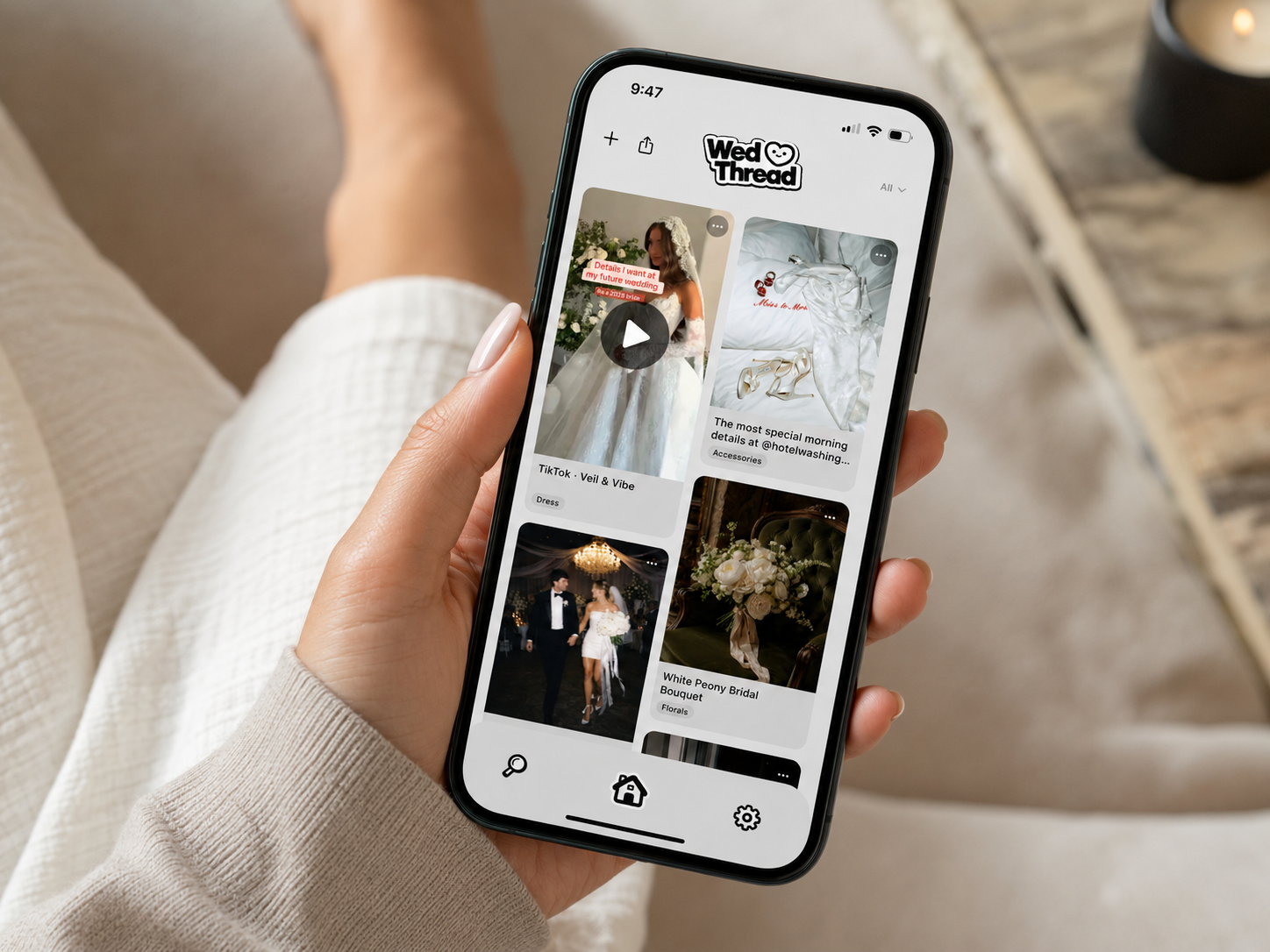
This is the resource most planning guides skip entirely, but it's where a huge amount of decision-making time actually goes. Inspiration comes from Pinterest, Instagram, TikTok, real weddings you've attended, and it tends to scatter across apps unless something is actively pulling it together. WedThread exists specifically for this piece, saving anything you find from any app through the share sheet and sorting it automatically into categories like Venue, Florals, and Decor, so it's organized without you doing the sorting by hand.
Guest List and RSVP Resources
A shared spreadsheet works fine for smaller guest lists. Larger weddings, especially ones with a lot of plus-ones or multiple households to track, benefit from a dedicated guest list tool or wedding website's built-in RSVP tracking, mainly because it reduces manual reconciliation between "who said yes" and "who's actually on the list."
Wedding Website Resources
A wedding website is one of the more genuinely useful modern resources, giving guests one place to find the schedule, registry links, and logistics instead of you fielding the same questions repeatedly by text. Most major registry and planning platforms include a free website builder, so this rarely needs to be a separate purchase.
Contract and Document Storage
Vendor contracts, deposit receipts, and confirmation emails have a way of scattering across inboxes and downloads folders. A single shared folder, whether that's Google Drive, Dropbox, or something similar, that both partners can access keeps this from becoming a scramble when a question comes up close to the date.
Registry Resources
Most registry platforms let you pull items from multiple stores into one list, which is worth using rather than sending guests to five separate registries. Registries are also one of the resources worth setting up relatively early, since some guests shop well ahead of the wedding date.
Resources for Managing Vendor Communication
As the number of vendors grows, a simple system, a shared inbox label, a running notes doc, or even just consistent file naming, saves real time when you need to find a specific answer weeks after the original conversation happened. This matters more than it sounds like it would, since vendor threads pile up fast once you're actively booking.
Resources Specific to DIY Elements
If you're making any part of your wedding yourself, signage, favors, centerpieces, Pinterest and YouTube tutorials remain genuinely useful, but pair them with a running supply list and timeline for when each DIY piece needs to be finished, so it doesn't all collapse into the final two weeks.
Resources for the Final Month
The last month benefits from a narrower, more focused set of resources: a finalized day-of timeline, a vendor contact sheet with day-of phone numbers, and a checklist of final confirmations. This is a good point to consolidate everything scattered across the earlier resources into one clean reference document.
Print or export copies of anything your day-of coordinator, wedding party, or family members will need to reference without a phone in hand, timelines, seating charts, vendor arrival windows. Relying entirely on digital resources through the final month works fine until a phone dies or a signal drops at the venue, so a backup paper copy of the truly critical documents is worth the small extra effort.
Resources for Post-Wedding Tasks
Planning resources don't stop being useful the moment the wedding ends. Thank you note tracking, name change paperwork if applicable, and final vendor payments or reviews all benefit from the same kind of organized approach used earlier in planning, rather than assuming the finish line is the wedding day itself and letting these tasks scatter afterward.
Not Every Resource Fits Every Wedding
A resource that's essential for a 200-guest formal wedding may be completely unnecessary for a 30-guest backyard celebration. Before adopting any tool or template, it's worth asking whether it solves a real problem for your specific wedding rather than adding it because a planning guide listed it as a must-have.
Building Your Own Shortlist
Rather than trying to use everything listed here, pick one resource per category that actually fits how you plan, and skip the rest. A smaller set of tools you actually use consistently beats a large collection of half-set-up accounts and abandoned spreadsheets.
A budget tracker, a timeline, a vendor contact list, and something to organize inspiration and saved ideas. Everything else, guest list tools, seating chart apps, registry builders, matters more as you get further into planning.
Not necessarily. Some couples prefer a handful of specialized tools, others prefer consolidating where possible. The right number is whatever you'll actually keep updated, not the maximum number of features.
Free resources cover most needs for most weddings. Paid tools tend to add convenience, extra storage, or advanced features rather than unlocking something free versions can't do at all.
Setting up a tool early and then not returning to it, so it's stale by the time it matters. A resource is only useful if you actually keep coming back to it through the planning process.
As soon as you get engaged for inspiration and budget tools specifically, since early decisions shape everything downstream. Detailed logistics tools become more useful in the final few months.
It covers the inspiration and research side specifically, saving anything from anywhere and sorting it automatically, which pairs well with a separate budget tracker or timeline tool for the logistics side.