- Start With What You Genuinely Need
- Covering a Real Range of Price Points
- How Many Items Is Enough
- Kitchen and Dining Essentials
- Home and Bedding Items
- Experience and Honeymoon Registry Options
- Including a Few Aspirational Items
- Registering for Non-Traditional Items
- Consolidating Multiple Stores
- Updating the Registry as Gifts Are Purchased
- Registry Etiquette Worth Knowing
- Handling Guests Who Don't Use the Registry
- Keeping Registry Ideas Organized While Building the List
- Registering as a Couple, Together
- Revisiting the Registry a Few Weeks Before the Wedding
- What to Do With Duplicate or Unwanted Gifts
- FAQ
Building a wedding registry sounds simple until you're actually staring at a blank list trying to figure out what you need, what you want, and how to give guests real choice across a range of budgets. Here's how to actually approach it.
Start With What You Genuinely Need
Before browsing for exciting items, take stock of what you actually need for your household, kitchen essentials, bedding, basic home goods. This unglamorous first pass often gets skipped in favor of registering for more exciting items first, but it ensures the practical basics don't get forgotten once the registry starts filling up with nicer additions.
Covering a Real Range of Price Points
A well-built registry spans from smaller items, $25 to $50, through mid-range items, $75 to $150, up to a few larger aspirational items in the $200 to $500-plus range. This range matters because guests have different budgets, and a registry that skews entirely toward expensive items leaves guests on tighter budgets with few genuine options.
How Many Items Is Enough
A loose guideline is 2 to 3 gift options per expected guest, which sounds like a lot but accounts for the reality that multiple guests may want to go in together on a larger item, and having enough variety prevents the registry from running dry if it's checked later in the planning process.
Kitchen and Dining Essentials
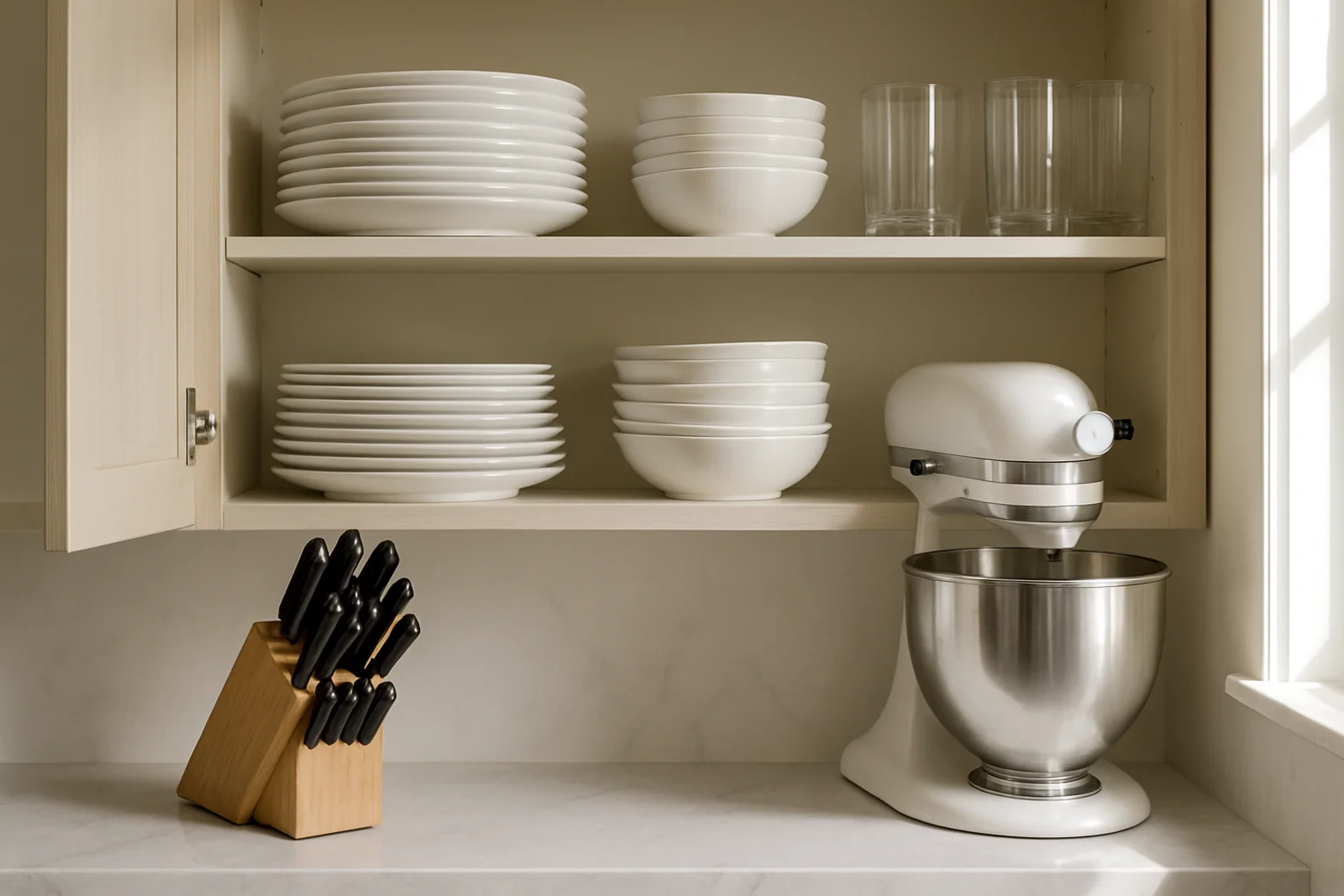
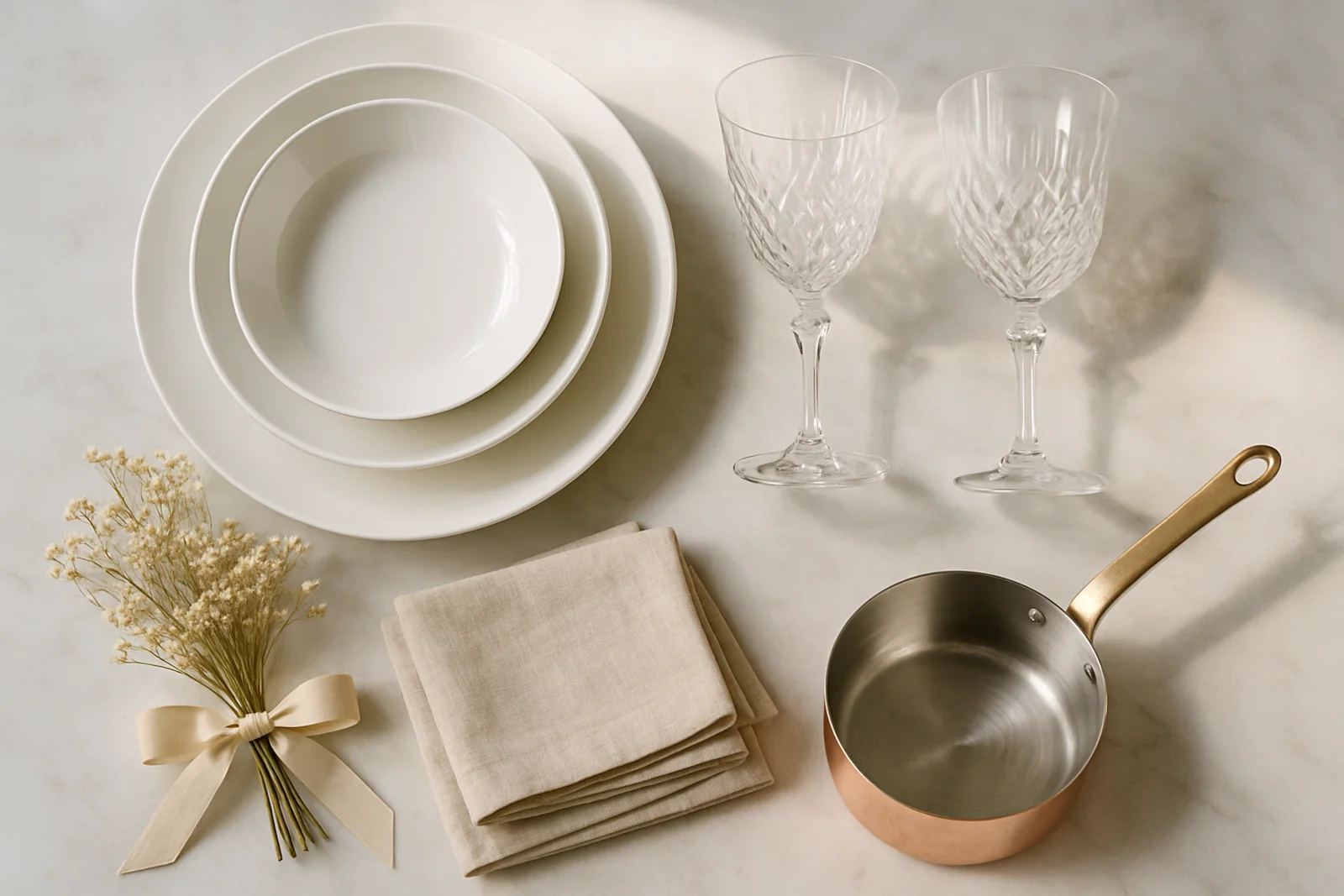
This is the traditional core of most registries, cookware, dinnerware, glassware, small appliances. Even couples who already have a fully stocked kitchen often find genuine gaps or upgrade opportunities worth including, a nicer set of knives, a stand mixer, items that tend to get deprioritized in everyday household spending.
Home and Bedding Items
Bedding, towels, and general home goods round out a traditional registry well, especially for couples merging two households or moving into a new place together. These items also tend to sit comfortably in the mid-range price bracket, useful for balancing out a registry that's otherwise weighted toward either very small or very large items.
Experience and Honeymoon Registry Options
For couples who are already established with most home essentials, honeymoon funds, experience-based registries, or cash funds toward a specific goal, a house down payment, home renovations, have become widely accepted alternatives to a traditional goods-based registry. Most major registry platforms now support this format directly.
Including a Few Aspirational Items
A handful of higher-priced items, even if you don't expect any single guest to purchase them outright, gives groups of guests, coworkers, extended family, a way to go in together on something meaningful. These items also tend to represent things you genuinely want but wouldn't necessarily buy for yourselves.
Registering for Non-Traditional Items
Registries have expanded well beyond housewares, some couples include home improvement tools, outdoor and camping gear, pet supplies, or hobby-related items that reflect their actual lifestyle rather than a generic traditional list. There's no rule requiring a registry to look a certain way, it should reflect what you'd genuinely use.
Consolidating Multiple Stores

If you're registering across multiple retailers, since different stores tend to excel at different categories, most registry platforms let you pull everything into one consolidated list for guests, avoiding the need to send multiple separate registry links.
Updating the Registry as Gifts Are Purchased
Most registry platforms automatically mark items as purchased to avoid duplicate gifts, but it's worth periodically checking in manually as well, especially closer to the wedding, to make sure the list still reflects a good range of available options rather than being picked over at one price point while another sits untouched.
Registry Etiquette Worth Knowing
Registry information belongs on your wedding website, not on the physical wedding invitation itself, which is still considered more appropriate etiquette even though registry links are now extremely common overall. Guests who want registry details will look for them on the website or ask directly.
Handling Guests Who Don't Use the Registry
Not every guest will shop from the registry, some prefer cash, others choose a personal gift outside the list, and that's completely fine. A well-built registry is meant to offer guidance and options, not a strict requirement guests are expected to follow exactly.
Keeping Registry Ideas Organized While Building the List
Registry building often happens in scattered bursts, browsing one evening, adding a few items, coming back weeks later with new ideas. Saving items and links as you find them, rather than trying to complete the whole list in one sitting, keeps good ideas from getting lost. Many couples keep this running list alongside their other wedding planning in WedThread, so registry ideas live in the same place as everything else instead of a separate, easy-to-forget browser tab.
Registering as a Couple, Together
Building the registry together, rather than one partner handling it alone, tends to produce a more balanced list reflecting both people's actual needs and preferences. Setting aside even one dedicated session to go through it together, rather than adding items independently over weeks, helps avoid ending up with a list skewed heavily toward one partner's taste.
Revisiting the Registry a Few Weeks Before the Wedding

A final check-in shortly before the wedding, confirming which items are still available, adding a few new ones if the list has thinned out in certain price ranges, keeps the registry useful right up through the final round of gift-giving as the date approaches.
What to Do With Duplicate or Unwanted Gifts
Even with automatic purchase tracking, occasional duplicates or gifts that don't quite fit still happen. Most retailers offer straightforward return or exchange processes for registry gifts specifically, and it's completely normal to use them rather than keeping something that doesn't actually work for your household.
A common guideline is 2 to 3 gift options per expected guest, spanning a range of price points, so there's genuine choice available regardless of what a guest wants to spend.
A good registry spans from smaller items around $25 to $50 up through larger items in the $200 to $500-plus range, giving guests options at every comfort level rather than skewing entirely toward expensive items.
Yes, honeymoon and cash funds are widely accepted now, especially for couples who are already established in a household and don't need traditional home goods.
Around the same time as save the dates, since some guests, especially those attending an engagement party or bridal shower, will want registry access well before the formal wedding invitation goes out.
Common and often useful, since different stores excel at different categories, though most registry platforms now let you consolidate multiple stores' items into a single unified list for guests.
Save items and links as you come across them rather than trying to build the whole registry in one sitting. Keeping a running list in WedThread alongside your other wedding planning means good ideas don't get forgotten between browsing sessions.