- A Structure to Start From
- Sample Opening Lines
- Sample Middle Sections
- Sample Promise Lines
- Sample Closing Lines
- A Full Sample Vow, Assembled
- If You're Not a Natural Writer
- Vows for Second Marriages or Blended Families
- What to Avoid
- Practical Tips for the Actual Reading
- Working Vows Around a Religious or Traditional Ceremony
- Keeping Your Favorite Lines Somewhere You Can Find Them
- Getting a Second Opinion Without Losing Your Voice
- When You're Genuinely Stuck
- Trusting That Your Version Is Enough
- It Gets Easier Once You Begin
- Start Now, Not Later
- FAQ
Staring at a blank page trying to write vow samples from scratch is one of the more surprisingly hard parts of wedding planning, since summing up how you feel about someone in under two minutes is genuinely difficult. Here's a simple structure, some sample language to adapt, and a few things worth avoiding.
A Structure to Start From
Most vows that land well follow a loose shape: how you met or what drew you in, what you've learned about each other or grown through together, a specific promise or two, and a closing line. You don't need to hit every beat, but having a shape to fill in beats staring at a blank page.
Sample Opening Lines
"I didn't expect to find this with you, but here we are." "From the first time we [specific memory], I knew there was something different about you." "You make ordinary days feel like something worth remembering." Openings work best when they're specific to your relationship rather than generic, even a small detail, where you met, an inside joke, makes it feel like yours.
Sample Middle Sections
This is where specificity matters most. Instead of "you make me happy," try naming what actually makes you happy: "you make me laugh at the worst possible moments," "you remember the small things I mention once," "you've never once made me feel like too much." Concrete, specific details are what separate vows that feel personal from vows that feel like a template.
Sample Promise Lines
"I promise to choose you, actively, on the easy days and the hard ones." "I promise to keep laughing with you, even when nothing's funny." "I promise to be the person you can be completely yourself around." Two or three promises is usually plenty. More than that and it starts to feel like a list rather than a moment.
Sample Closing Lines
"I can't wait to spend the rest of my life doing all of this, and nothing, with you." "Here's to everything we've been, and everything we're about to become." Closings work best short and direct, the emotional peak, not another paragraph of explanation.
A Full Sample Vow, Assembled
"I didn't expect to find this with you, but here we are. You've taught me that love isn't always the big moments, it's the small ones too, the way you remember how I take my coffee, the way you make even a bad day feel manageable. I promise to keep choosing you, on the easy days and the hard ones. I promise to laugh with you, even when nothing's funny. Here's to everything we've been, and everything we're about to become."
If You're Not a Natural Writer
Not everyone finds this easy, and that's fine. If a blank page feels impossible, start differently: instead of trying to write, talk it out loud to yourself or record a voice memo answering "what do I love about them" and "what am I promising." Transcribe the parts that sound genuine, then shape those into the structure above. It's much easier to edit something that already exists than to generate polished sentences from nothing.
Vows for Second Marriages or Blended Families
If this isn't a first marriage, or if children are part of the picture, it's worth deciding ahead of time whether to acknowledge that directly in the vows. Some couples include a line about a blended family or a promise to a stepchild, which can be genuinely moving when it fits naturally. Others prefer to keep the vows focused solely on the partnership and address family separately elsewhere in the ceremony. Neither is more correct, it depends on what feels true to your specific relationship and family.
What to Avoid
Inside jokes only the two of you understand can fall flat with a full room listening, save those for a private toast instead. Long lists of specific dates or logistics read more like a resume than a vow. And borrowing lines wholesale from a movie or song without making them your own tends to feel less personal than something shorter and plainer in your own words.
Practical Tips for the Actual Reading
Bring a printed copy, even if you've memorized it, memory tends to blank under pressure in front of a crowd. Practice reading it out loud, not just silently, since the pacing feels different once you hear it. And it's genuinely fine to get emotional partway through. Pausing doesn't ruin the moment, it usually makes it more real.
Working Vows Around a Religious or Traditional Ceremony
If your ceremony includes traditional or religious vows as part of the service, check with your officiant on whether there's room for personal vows in addition to, or in place of, the traditional text. Some traditions have specific wording that's required, others leave more room for personalization. Knowing this ahead of time, rather than discovering it during a rehearsal, avoids having to rewrite personal vows at the last minute to fit the actual structure of the ceremony.
Keeping Your Favorite Lines Somewhere You Can Find Them
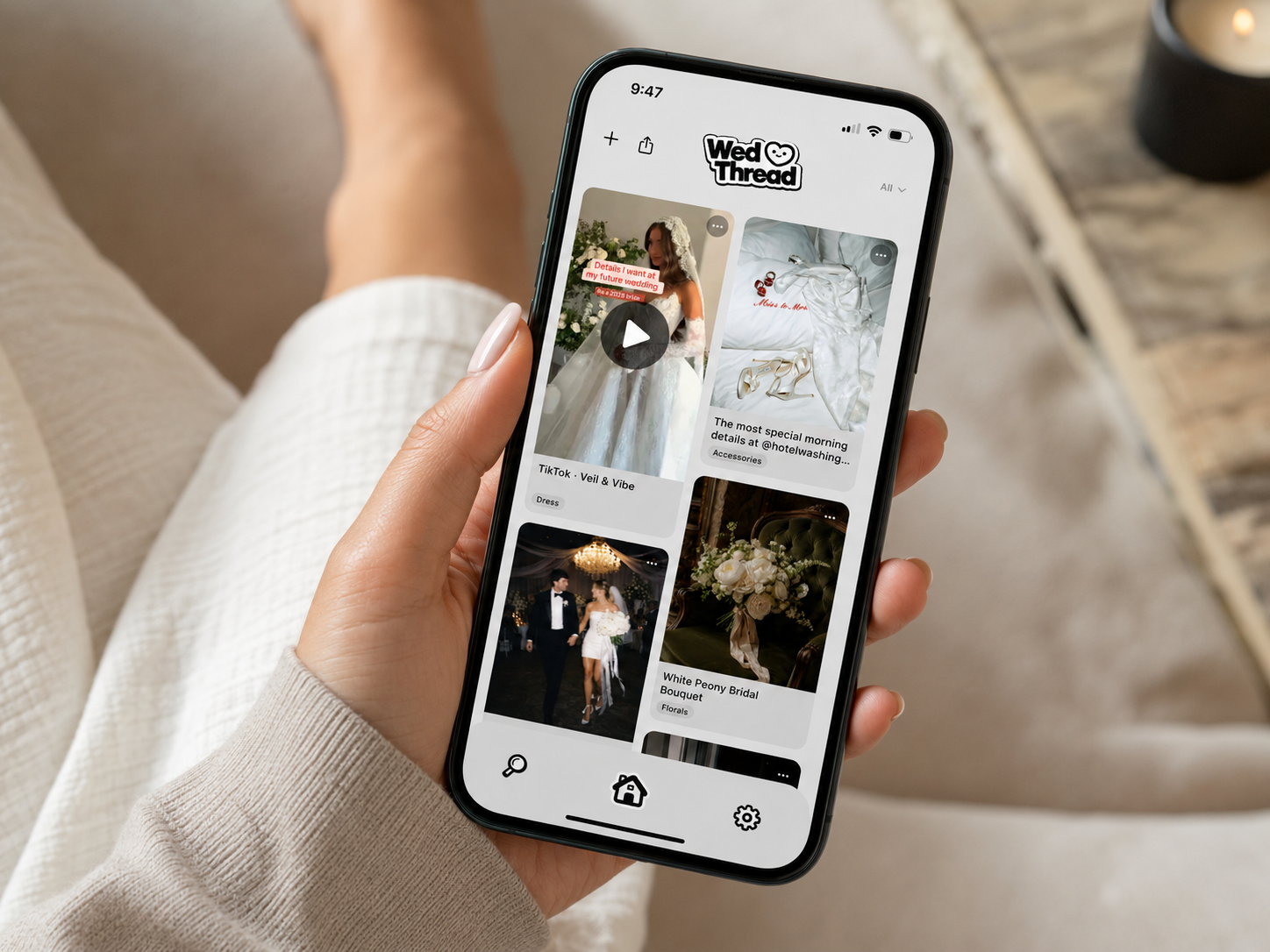
Vow inspiration tends to come from everywhere, a line from a movie, something a friend said in a toast, a phrase you jotted down at 2am. Most people end up with drafts scattered across notes apps, texts to themselves, and half-finished email drafts. Saving the lines and ideas you actually want to use in WedThread, sorted into your own Planning/Tips category, means when you sit down to write the final version, everything you liked is already in one place.
Getting a Second Opinion Without Losing Your Voice
If you want feedback before the wedding, ask one trusted person, not a group, to read a draft. A single thoughtful reader catches genuine issues, an unclear line, something too long, without diluting your voice the way feedback from five different people tends to. If a suggestion doesn't sound like something you'd actually say, it's fine to leave it out even if it's technically good advice. The goal is vows that sound like you on your best, most sincere day, not a committee's version of what vows should sound like.
When You're Genuinely Stuck
If a full draft still isn't coming together close to the deadline, simplify further, write down three true sentences about your partner and build outward from those instead of trying to construct something elaborate from scratch. Short, honest vows built from a few genuine sentences consistently land better than long ones stitched together under pressure.
Trusting That Your Version Is Enough
However your final vows turn out, longer or shorter, funnier or more serious than these examples, they'll be right if they're honest and genuinely yours. That's the actual bar, not a polished performance.
It Gets Easier Once You Begin
The blank page is the hardest part. Once a few honest sentences are down, the rest tends to come together faster than the dread beforehand usually suggests it will.
Start Now, Not Later
Whatever stage you're at, open a blank note today and write down one true thing about your partner. That's the actual first step, everything else builds from there.
About 1 to 2 minutes when read aloud, roughly 250 to 400 words. Longer than that and they start to lose the room, especially if both partners are reading similarly long vows back to back.
They don't need to match exactly, but a huge gap, one partner reading a page while the other reads three lines, can feel lopsided in the moment. Talk about rough length ahead of time, even if you don't share the actual content.
Yes, a structure or template is a starting point, not a script. Filling in your own specifics, memories, and voice is what makes it sound like you rather than something copied off the internet.
Most vows work best somewhere in between, one or two genuine, specific memories or promises, with maybe a light moment mixed in. Vows that are all jokes can feel like they're avoiding the actual sentiment.
Personal preference. Some couples like the surprise, others prefer knowing roughly what's coming so neither person is caught off guard mid-ceremony. Neither approach is wrong.
Extremely normal, and honestly expected. Bring a printed copy instead of relying on memory, and don't be afraid to pause. Nobody in the audience is judging the pace, they're just watching you love someone.
Somewhere you can actually find the version you're happy with. A lot of people end up with vow drafts scattered across notes apps and email drafts. Saving your favorite lines and inspiration in one place, like WedThread, makes it easier to pull the final version together instead of hunting through old notes the week of.